
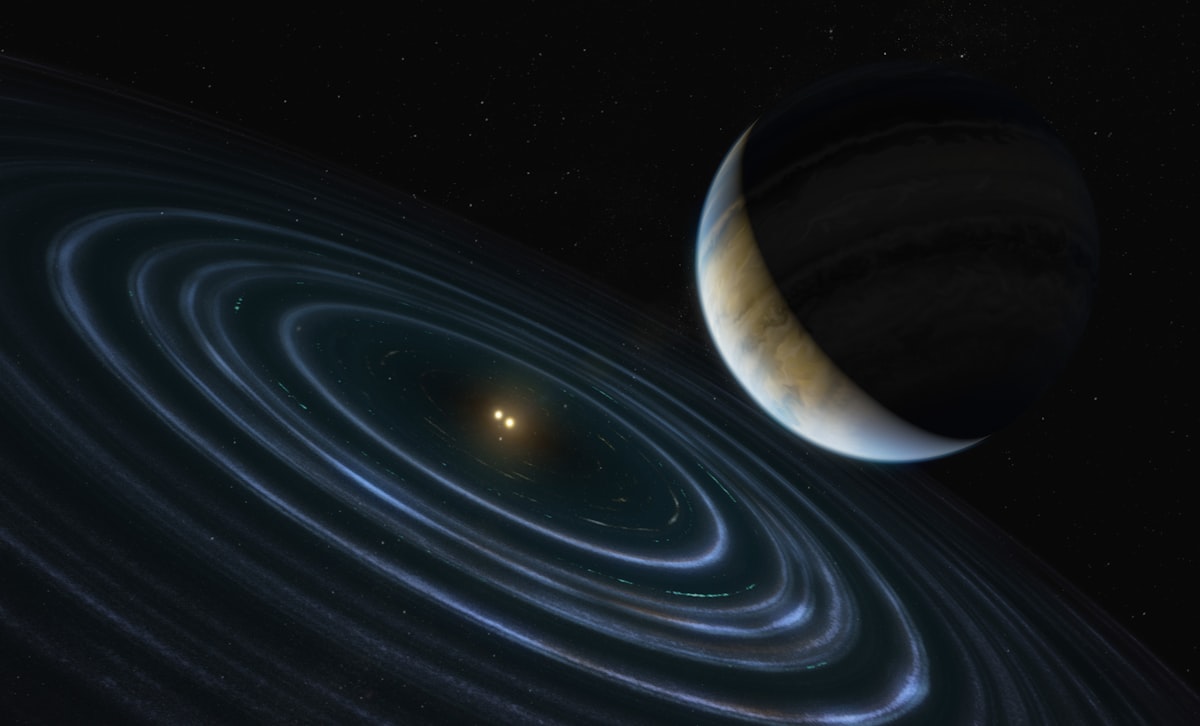
NASA’s planet hunter has been quietly piling up data for seven years, and most of it has never been examined by a human. A team at the University of Warwick reports that an automated machine-learning pipeline they built, called RAVEN, has now combed through that archive and statistically validated 118 new exoplanets, along with more than 2,000 high-quality candidates that are worth follow-up. About 1,000 of those candidates were not in any prior catalog. The same analysis produced the first direct, population-level measurement of the so-called Neptunian desert, the region close to stars where Neptune-sized planets are oddly absent. The desert is real, and it is almost completely empty: roughly 0.08 percent of Sun-like stars host one.
Why TESS has a backlog
The Transiting Exoplanet Survey Satellite launched in April 2018 and has been staring at one patch of sky after another ever since, watching about 200,000 of the nearest, brightest stars for the small periodic dips that betray a transiting planet. The mission’s success has created its own problem. TESS produces tens of thousands of “threshold-crossing events” per sector, the vast majority of which are not planets at all. They are eclipsing binary stars, background blends, instrument systematics, or stellar variability. Each candidate has to be vetted before anyone calls it a planet.
Until recently, vetting was mostly a human job. A scientist or a student would look at the light curve, check the centroid motion, inspect ground-based imaging, and decide whether a signal was real. That works for a few hundred candidates. It does not work for tens of thousands. The TESS Object of Interest catalog has been growing faster than the community can clear it.
What RAVEN does
RAVEN, short for Recurrent Automated Vetting and Exoplanet Network, replaces most of that human work with a trained model. The Warwick group, led by graduate researcher Faith Hawthorn with Daniel Bayliss and others, trained the network on hundreds of thousands of simulated TESS light curves where the ground truth is known. The simulations include real planets, eclipsing binaries, background eclipsing binaries blended into the photometric aperture, and a long list of instrumental false positives. The network learns to tell them apart and outputs a probability that a given candidate is a true planet.
For each TESS candidate, RAVEN ingests the phase-folded light curve, the centroid time series, and contextual information about the host star (radius, temperature, crowding from nearby sources). It then produces a single score. A high score is statistical validation: the chance that the signal is anything other than a planet is below a strict threshold. That is the standard exoplanet community uses when no radial-velocity mass measurement is available, and it is the same standard that delivered most of the Kepler catalog.
Running RAVEN over the TESS archive produced the 118 newly validated planets and a fresh tier of unvetted high-confidence candidates. The validated set spans roughly Earth-sized worlds through hot Jupiters, with most clustered in the small-and-warm regime where TESS is most sensitive.
The Neptunian desert, measured
The single most interesting science result is not any individual planet. It is what the population looks like in a region that has puzzled exoplanet scientists for a decade.
The Neptunian desert is the gap on a plot of planet radius versus orbital period: planets the size of Neptune, between roughly 2 and 6 Earth radii, with orbital periods of less than about 4 days. Hot Jupiters live there. Small rocky planets live there. Neptunes, for some reason, do not. The leading explanations involve photoevaporation (the planet’s atmosphere being stripped by stellar X-ray and ultraviolet radiation) and high-eccentricity migration histories that prevent Neptunes from settling that close in the first place. The arguments have been hard to settle because the sample of confirmed desert planets has been very small.
RAVEN’s homogeneous, automated treatment of the TESS archive lets the Warwick team turn the question around. Instead of asking “how do desert planets form,” they can ask “given how TESS searches and what it would have found if such planets were common, how many should we expect to see?” The answer, after correcting for survey completeness, is that Neptunian desert planets occur around about 0.08 percent of Sun-like stars. Compared with the roughly 30 to 50 percent occurrence rate of small planets at longer periods, that is empty enough to count as a real physical boundary rather than a sampling artifact.
That number now becomes the target for atmospheric escape models. If theorists can reproduce 0.08 percent from first principles, the photoevaporation story is in good shape. If they cannot, the field will know to look harder at migration.
What this changes
Two things, mainly. First, the TESS archive is far from exhausted. A trained model running over existing data can still pull out hundreds of new worlds, which means the cost per discovery is dropping fast. Second, automated vetting is finally good enough to produce statistical samples rather than one-off curiosities. Population-level questions, such as where planets do and do not form, are now answerable with the data already on disk.
The next obvious step is to point the same tool at upcoming surveys. The PLATO mission, scheduled for launch in late 2026, will deliver light curves for around 200,000 bright stars over four years, with much higher photometric precision than TESS. RAVEN-class vetters running on PLATO data should be able to validate Earth-analog candidates that current pipelines would lose in the noise.
For now, the headline is simpler. An old space telescope and a new piece of software have just handed astronomers 118 more worlds and a number where there used to be a guess.