
[EDITORIAL FLAG: factual — no inline-linked sources for specific numeric/named claims throughout (tube count, cost figures, IRB report, dates, China Tianwen-3 architecture). Per the style guide, posts/ claims should be traceable to inline-linked sources. Verify against primary sources before relying on numbers.]
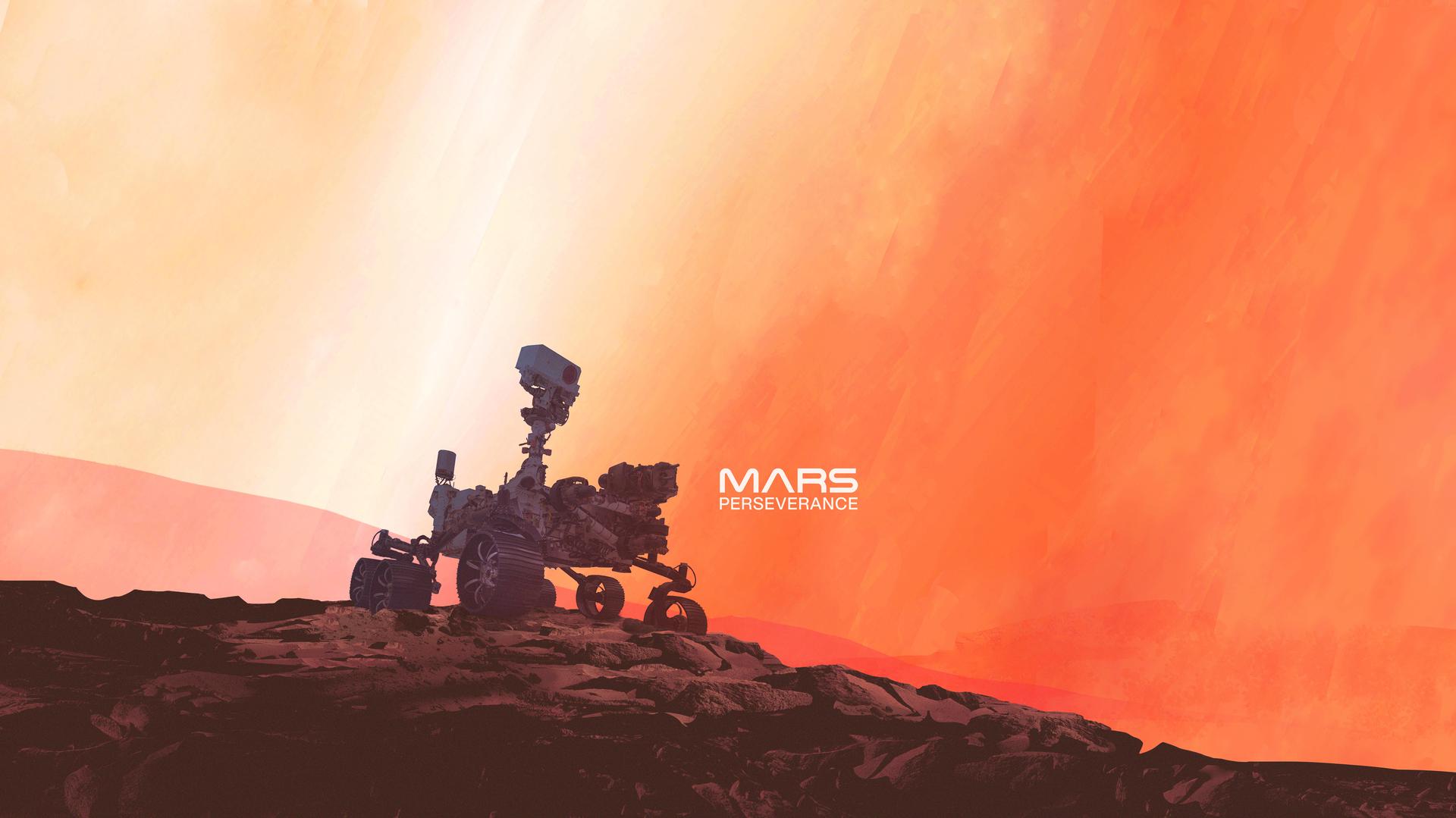
There are roughly thirty titanium tubes sitting on the surface of Mars right now, each one filled with a carefully chosen fragment of rock or soil. They were sealed by a six-wheeled robot named Perseverance, which has been working its way across the floor of Jezero Crater since February 2021. The samples inside those tubes are arguably the most scientifically valuable objects ever assembled by humans off Earth. They include sedimentary rock from what was once a river delta, mudstone that may preserve organic chemistry, and an atmospheric sample sealed in the same tube as the rock.
The plan was to fetch them home. That plan is in trouble.
What Mars Sample Return was supposed to be
The official Mars Sample Return (MSR) program is a joint NASA and European Space Agency effort first conceived in detail in the early 2010s and formally adopted around 2020. The architecture, at its most stable, looked like this. A NASA-built Sample Retrieval Lander would land near Perseverance, deploy a small ESA-built fetch rover and a Mars Ascent Vehicle (MAV), collect the cached tubes, load them into the MAV, and launch the MAV from the Martian surface into Mars orbit. An ESA-built Earth Return Orbiter would then capture the sample container in orbit, break orbit, fly back to Earth, and release the container into a high-speed Earth reentry capsule.
It would be the first ascent from the surface of another planet. It would be the first round-trip robotic mission from Mars. It would deliver, to a sealed receiving facility on Earth, roughly half a kilogram of carefully selected Martian material that scientists could study with instruments orders of magnitude more sensitive than anything that can be flown.
It was estimated, in the early 2020s, to cost around four to five billion dollars and to deliver samples to Earth in the early 2030s.
What happened
By 2023 the program was visibly struggling. An Independent Review Board commissioned by NASA delivered a blunt report. The cost estimate had climbed to between eight and eleven billion dollars. The schedule had slipped past 2030 and into the 2040s. The board concluded that the program as architected was not technically or programmatically viable.
In April 2024, NASA Administrator Bill Nelson confirmed publicly what had been clear internally for some time: the original architecture would not work. NASA solicited alternative concepts from JPL and from industry. Lockheed Martin, Northrop Grumman, Boeing, Aerojet Rocketdyne, Blue Origin, SpaceX, and several smaller companies submitted proposals. The agency promised a path forward.
The path forward has been slow to crystallize. JPL had to lay off hundreds of employees in early 2024, in part because MSR funding could not support the team it had assembled. The program has been operating in a kind of limbo, with the rover continuing to cache samples on Mars while the back half of the mission, the part that actually retrieves them, has no firm architecture, schedule, or budget.
What is on the surface
Perseverance has cached a strategic sample depot at a location called Three Forks, with roughly ten tubes deposited there as a backup in case the rover itself is lost. The rover continues to carry an additional set of tubes onboard, which it would hand off directly to a future fetch system if that system arrived in time. The samples include carbonate-bearing rocks that may preserve evidence of ancient water chemistry, sulfate-bearing rocks that record more recent environmental conditions, and an igneous sample that provides absolute age dating for the entire stratigraphy.
The scientific case for bringing these samples back has not weakened. If anything, the rover has overdelivered on the geological diversity of what it has collected. The political and budgetary case has weakened considerably.
Why this matters now
China’s Tianwen-3 mission has been openly targeting a Mars sample return campaign with a return-to-Earth window in roughly the same timeframe. The Chinese architecture is simpler. It uses a single lander and ascent stage at a single site, without the multi-spacecraft choreography of the NASA and ESA plan. It will not return samples from a long-traversed and carefully curated set of geological contexts. But it will return Martian material to Earth.
If Tianwen-3 launches on schedule and succeeds, China will become the first nation to bring back samples from Mars. The scientific value of those samples will be real but limited by the lack of selection that ground-based mobility provides. The symbolic value will be substantial.
NASA’s program, with its scientifically richer cache, may arrive years later, or may not arrive at all in its current form.
What an alternative could look like
The cost overruns on the original MSR architecture came from several sources. The Sample Retrieval Lander grew to become the largest and most complex thing NASA had ever attempted to set down on Mars, larger than the Curiosity skycrane delivery and more demanding in mass and precision. The MAV had to be carried on that lander, fueled, and protected through entry, descent, and landing. The fetch rover added a second mobile platform with its own development cost. The Earth Return Orbiter, an ESA-built spacecraft, became the most ambitious deep-space vehicle Europe had ever flown.
Alternative concepts under study have included using a heavy commercial lander, possibly derived from SpaceX Starship or Blue Origin Blue Moon technology, to deliver a smaller and simpler return architecture. Some concepts skip the fetch rover and rely on Perseverance itself, which is well past its design lifetime but still operating, to drive the samples to the ascent vehicle. Others propose a smaller MAV that returns a reduced sample mass.
None of these have been formally adopted. NASA is expected to announce a revised architecture and budget in 2026, with a goal of delivering samples in the mid-to-late 2030s. The agency’s credibility on schedule and cost commitments for this program is low.
The samples will wait
Mars is patient. The samples sealed in those tubes are not going anywhere, and the environment of the Martian surface, with its cold and dryness and lack of biology, will not meaningfully degrade them on the timescale of decades. If they sit there until the 2040s, they will be fine. If they sit there until the 2050s, they will still be fine.
What will not be fine is the political coalition that funded their collection. The scientists who designed the sample selection are aging. The engineers who built the caching system are dispersing. The institutional memory that knows why those particular tubes were picked, in that particular order, in that particular location, is not infinitely durable.
The tubes on Mars are a bet that humans, at some point, will find a way to go get them. The bet was placed in 2020. It is, in 2026, still a bet.