
[EDITORIAL FLAG: factual — no inline-linked sources for specific dates (Europa Clipper trajectory milestones, Dragonfly CDR, China lunar dates). Per the style guide, posts/ claims should be traceable to inline-linked sources.]
[EDITORIAL FLAG: quality — length 571 words, below the 700-word floor for analysis posts. If kept as a roundup format, consider moving to a different collection or shortening to a news brief.]
A quick summary of the most important developments in space exploration this week, and why each one matters.
Europa Clipper trajectory update
NASA’s Europa Clipper spacecraft, launched in October 2024, is currently in the asteroid belt on its way to Jupiter. The mission passed its first major trajectory correction maneuver successfully in late 2024, and ground controllers at JPL confirm all nine science instruments are functional. The spacecraft will reach Jupiter in April 2030 for its first flyby of Europa.
The significance: this is the first spacecraft in 25 years sent specifically to study an ocean world. Every status check that comes back nominal is a step toward what could be one of the most consequential missions in the history of planetary science.
Axiom Mission 4 to the ISS
Axiom Space is preparing for its fourth commercial crew mission to the International Space Station, currently targeted for late spring 2026. The crew includes astronauts from three countries, continuing the trend of Axiom missions serving as vehicles for national space agencies to gain orbital experience without operating their own spacecraft.
The significance: Axiom’s commercial ISS missions are a proof of concept for the post-ISS era. The company is building its own commercial space station, currently planned to operate independently after detaching from the ISS around 2030. Each successful mission builds operational experience and investor confidence for that larger ambition.
Dragonfly passes critical design review
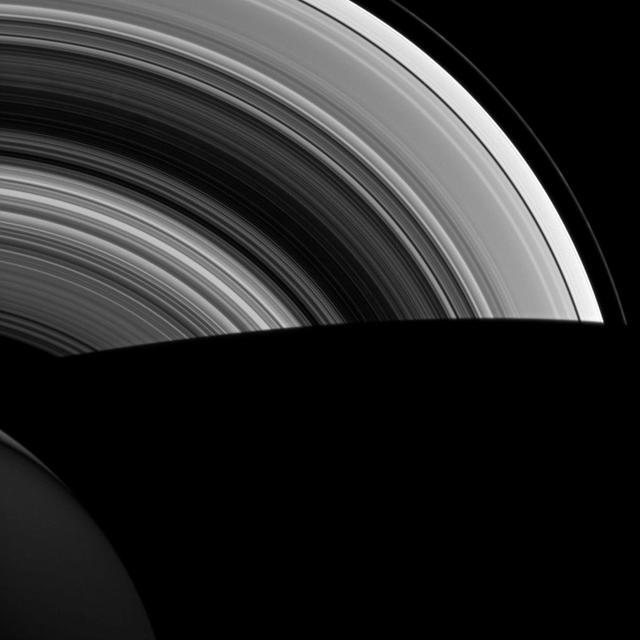
NASA’s Dragonfly mission, a helicopter-style drone destined for Saturn’s moon Titan, passed its critical design review, the milestone at which the engineering design is confirmed as buildable and the program commits to construction. Dragonfly is targeted for launch in 2028 and arrival at Titan in 2034.
Titan is remarkable: it has a dense nitrogen atmosphere, lakes of liquid methane and ethane, and complex organic chemistry on its surface. Dragonfly will fly from site to site, covering more territory in a single flight than any rover has covered in its entire mission, sampling organic materials in a location that may preserve chemistry similar to what existed on early Earth.
The significance: Dragonfly represents a qualitative leap in what we can learn about Titan. Previous knowledge mostly comes from Cassini’s flybys and the Huygens probe, which descended through the atmosphere once in 2005. A surface explorer that can move and sample is transformative.
China announces second crewed lunar mission
The China National Space Administration confirmed this week that its second crewed lunar landing mission, building on the Chang’e series, is targeting 2031. The first crewed mission remains planned for 2030. The announcement included details of the landing site selection process, emphasizing the lunar south pole region for the same reasons NASA’s Artemis program targets it: proximity to water ice deposits.
The significance: this is a serious program, not a political announcement. China has landed multiple rovers on the Moon, retrieved lunar samples with Chang’e 5, and successfully landed on the lunar far side, all of which demonstrated the operational capabilities needed for crewed missions. The 2030s will see the first competing national programs to operate on the lunar surface simultaneously, raising both the scientific richness and the geopolitical complexity of lunar exploration.
Further reading
For deeper background on any of these topics, the analysis pieces in our posts section cover Europa in detail, the economics of commercial space, and the science of Titan’s chemistry. Bookmark the news section for ongoing updates as these missions develop.