
[EDITORIAL FLAG: image — reused within 30 days: starship-v3-flight-12-preview (published 2026-05-20); same cover used on preview + result of same flight, intentional but flagging per the 30-day reuse rule]
The biggest rocket SpaceX has ever flown lifted off from Starbase at 22:30 UTC on May 22, climbed through max-Q with 32 of its 33 Raptor engines running, dropped 22 satellites in low Earth orbit, and flipped to a soft splashdown in the Indian Ocean about an hour later. [EDITORIAL FLAG: quality — jargon undefined: “max-Q” (the moment of peak aerodynamic stress during ascent) — define on first use] The Super Heavy booster that pushed it off the pad was less lucky. After staging, it tried to slow itself for an ocean landing simulation, relit only one Raptor where it needed many, and slammed into the Gulf of Mexico at speed.
For SpaceX, that is a flight that worked.
What flew
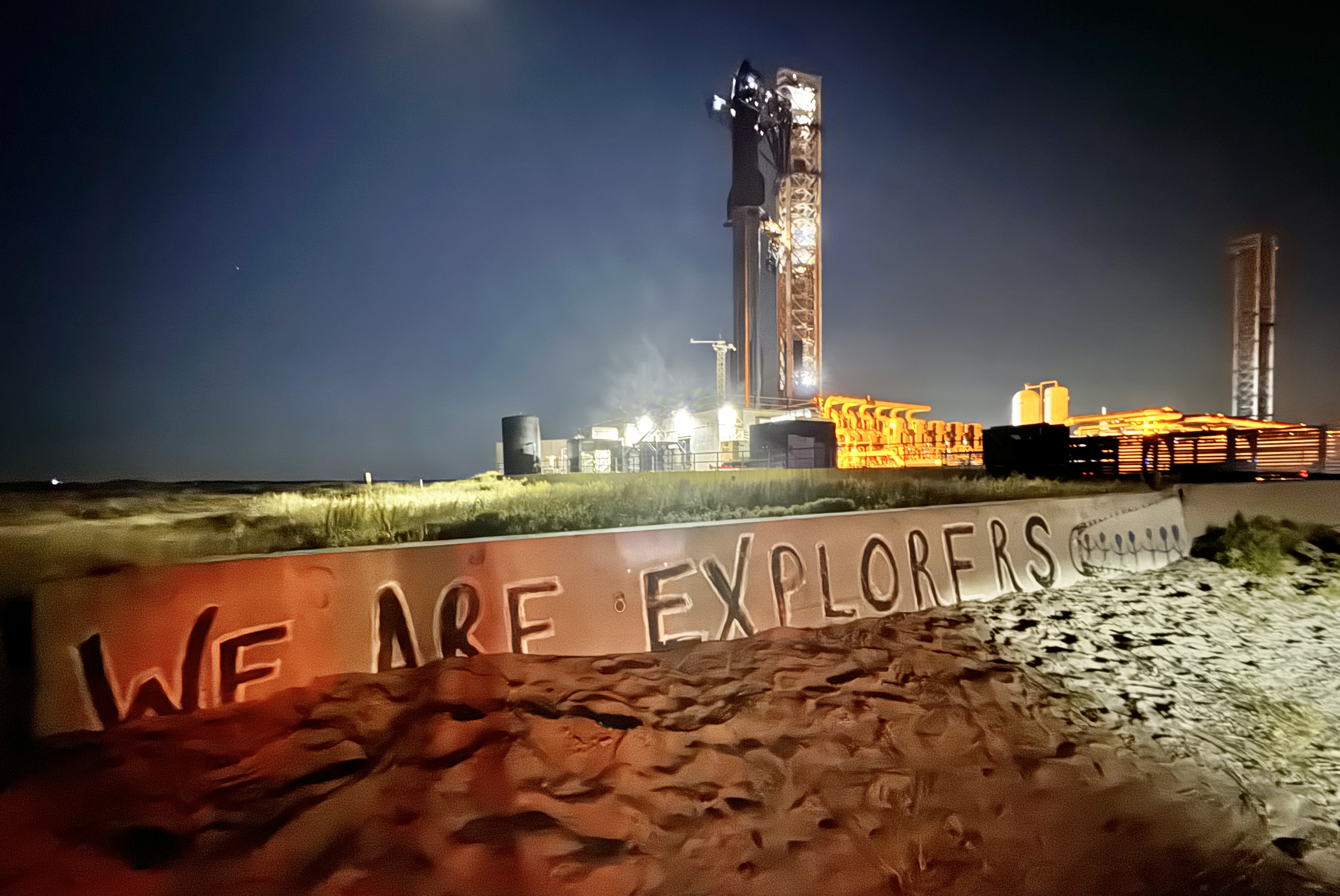
Flight 12 was the debut of Starship V3, also called Block 3, the third major iteration of the vehicle. At 124 meters tall it is the largest rocket ever to leave a pad. Booster B19 and Ship S39 lifted off from Starbase’s new second launch pad, OLP-2, after a scrub the previous evening for ground-side issues. The combined stack carried 20 Starlink simulator satellites and two modified Starlink V3 satellites, roughly 44 tonnes of payload, the most Starship has ever carried.
The launch was Starship’s first flight in roughly seven months. V2 finished its test campaign last year and the program has been working through a redesign that touches almost every system: bigger grid fins, more thrust per engine, a fuel transfer line the size of a Falcon 9 first stage, more cameras, more compute. The seven-month gap was the longest pause in Starship’s flight history.
What worked
The ship reached its planned cutoff velocity despite losing one of its Raptor Vacuum engines on the way up. Engine-out capability, the ability to lose a single engine and still hit the target trajectory, is one of the architectural promises of the vehicle, and it held. Around halfway through its coast it released all 22 satellite simulators, ticking off the first true payload deployment of the program. It then re-entered the atmosphere, executed the now-familiar belly-flop maneuver, relit two engines for the landing flip, and set itself down on the water near a tracking ship.
SpaceX has never recovered a Starship upper stage. The point of these splashdown landings is to prove the maneuver works. This one did.
What did not
Super Heavy was the bad news. After hot-staging, B19 was supposed to relight 13 engines for its boost-back burn and only got 5. [EDITORIAL FLAG: quality — jargon undefined: “hot-staging” (igniting the upper stage’s engines while still attached to the booster, before separation) — define on first use] It limped through a glide phase and, when it came time for the landing burn, lit only one engine. With a vehicle that empty and that big, one engine is not enough lift. It hit the Gulf hard and broke up.
The booster was not planned to be recovered on this flight; the landing burn was a test, not a save. But the engine-relight failure is the kind of result that drives the next several months of work at Starbase. SpaceX has caught Super Heavy boosters with the launch tower’s mechanical arms on three previous flights. Block 3’s first attempt did not get close.
Why it matters
NASA needs Starship to land astronauts. The agency’s Human Landing System contract, worth roughly $4 billion, depends on a crew-rated lunar Starship being ready for Artemis 4 in 2028. To get there, SpaceX has to demonstrate orbital refueling between two Starships, a long-duration cryogenic propellant transfer no one has ever flown. That program cannot begin in earnest until the basic vehicle is reliable.
Flight 12 was the first concrete proof that V3 can fly at all. The ship hitting its splashdown target with full payload aboard is a meaningful step. The booster failing its relight sequence is the meaningful caveat. SpaceX’s stated cadence goal for the rest of 2026 is roughly one Starship flight per month. After a seven-month gap, that target now has to be earned back one test at a time.
What to watch next
Whether SpaceX flies Flight 13 on or near its planned summer slot, and whether that flight attempts a booster catch back at the launch tower. Also: the timing of the first ship-to-ship propellant transfer demonstration, which the FAA license modification for Starbase has been quietly tracking, and which the lunar architecture cannot work without.