
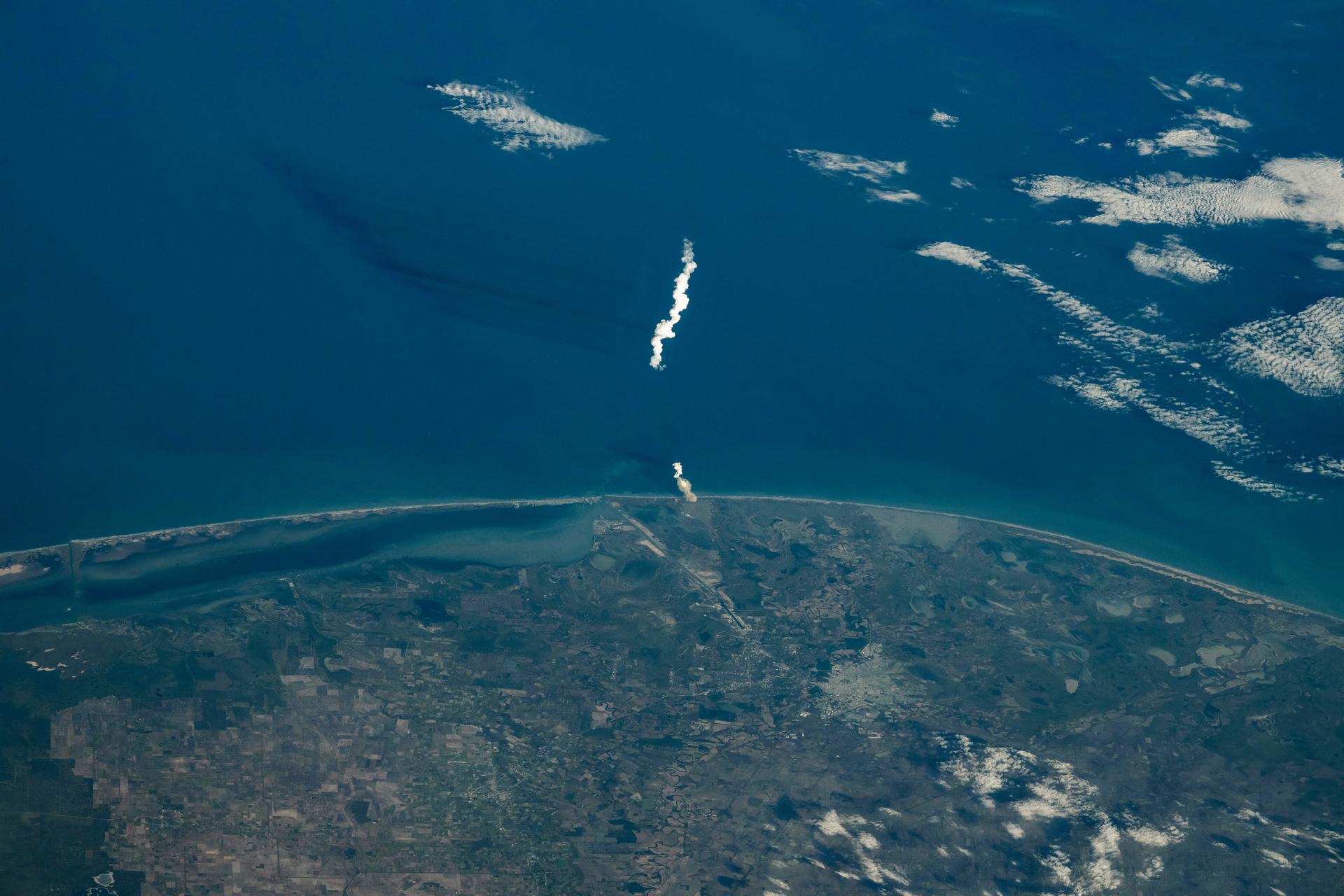
Starship has not yet reached operational status. It has completed four integrated flight tests, with improving results each time. The vehicle is designed to carry up to 100 metric tons to low Earth orbit, potentially 150 metric tons with full reusability. Those numbers, if delivered, would dwarf every other launch vehicle in existence or in development.
Customers have started making commitments. Their choices reveal what they think is credible and on what timeline.
NASA Artemis HLS
The most prominent Starship commitment is the Human Landing System contract with NASA. SpaceX won the HLS contract in 2021 over Blue Origin’s National Team proposal, and the award survived a legal challenge. Under this contract, Starship is the vehicle that will land astronauts on the Moon for the first time since 1972.
The Artemis III mission, the first crewed lunar landing, requires Starship to be refueled in orbit using multiple propellant depot flights. This is the most technically complex aspect of the mission and has never been demonstrated. NASA has accepted that risk in exchange for the performance Starship promises.
Commercial satellite operators
At least one commercial satellite operator has signed for Starship launch services. The vehicle’s large fairing, roughly 9 meters in diameter compared to Falcon 9’s 5.2 meters, allows very large spacecraft or many satellites in a single launch. Telecommunications companies designing next-generation satellites have been constrained by what fits inside existing fairings. Starship changes that constraint fundamentally.
The StarShield consideration
SpaceX’s classified government launch services, branded StarShield, use Falcon 9 and Falcon Heavy for national security satellite launches. Starship has been discussed as a future option for the largest national security payloads, some of which have historically flown on the Delta IV Heavy and are migrating to Vulcan. Whether Starship achieves the reliability certifications required for those missions is a multi-year process.
What the commitment list tells us
Customers committing to Starship now are making a bet that the vehicle reaches operational status within their planning horizon, typically 3 to 6 years. They are also betting on the launch pricing SpaceX has indicated, which would be substantially below any competitor for equivalent capability.
The realistic question is not whether Starship will eventually work. The technology is clearly advancing. The question is whether it achieves the launch cadence and reliability that commercial customers need on a timeline that matches their operational plans. That answer will become clearer as the test program continues.