
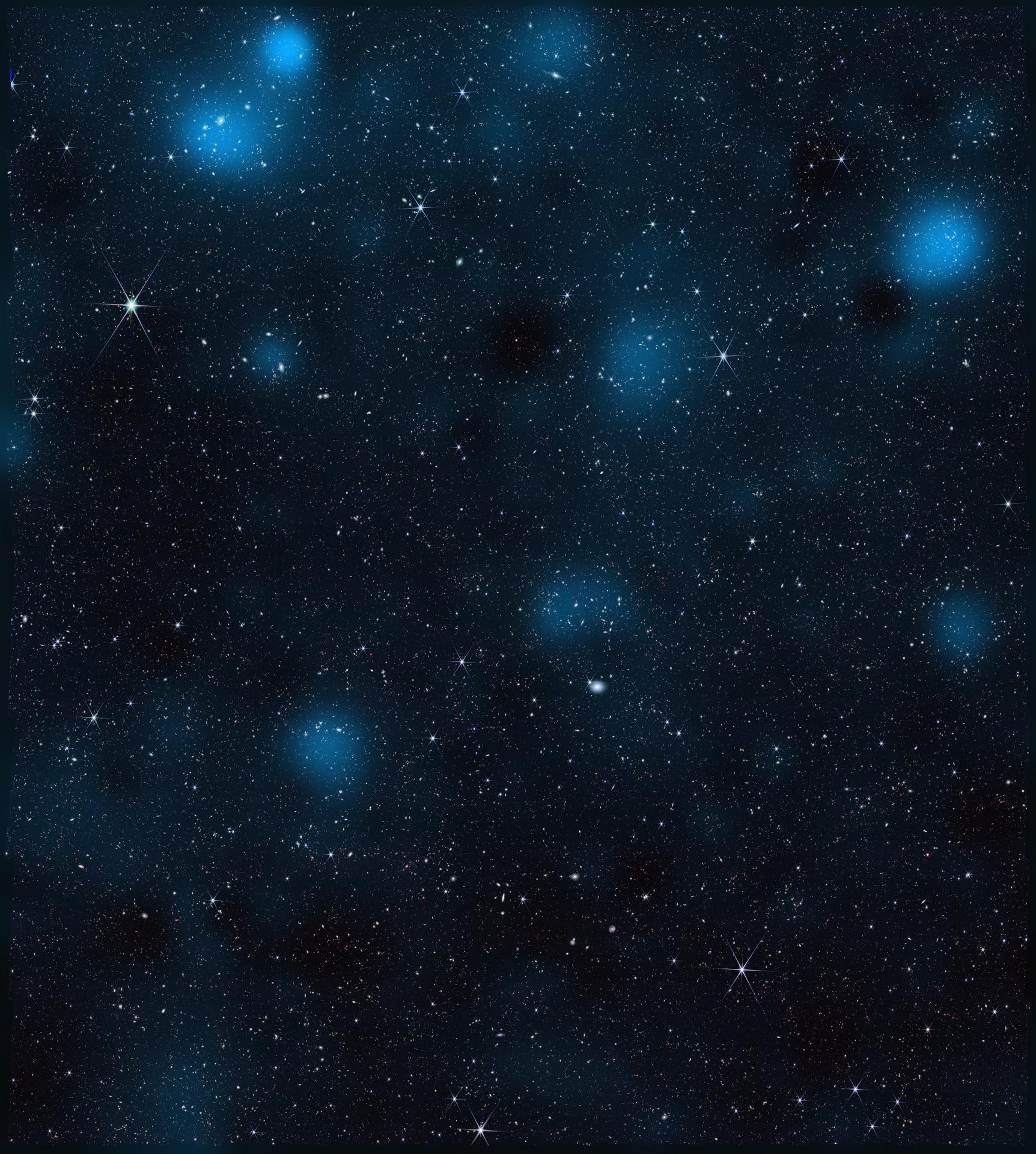
The universe is not arranged at random. Galaxies hang on a vast hidden scaffolding of dark matter and gas, and astronomers using NASA’s James Webb Space Telescope have now produced the clearest picture we have of how that scaffolding looked in the deep past.
What happened
A team led by graduate student Hossein Hatamnia at UC Riverside and the Carnegie Observatories used data from the COSMOS-Web survey to map the cosmic density of 164,000 galaxies, reaching out to a redshift of roughly z=7 (redshift, a measure of how much the expansion of space has stretched the light from an object on its way to us; higher numbers mean both farther away and longer ago). The paper appeared in The Astrophysical Journal on May 11. Where earlier maps blurred large stretches of the early universe into smooth shapes, the new data resolves individual filaments and voids. “What used to look like a single structure now resolves into many,” senior author Bahram Mobasher said in the UCR release, “and details that were smoothed away before, are now clearly visible.”
Why it matters
The cosmic web is the universe’s actual skeleton. Filaments of dark matter and gas thread the dark between galaxies; clusters form at the intersections; the great voids between filaments are nearly empty. Galaxies do not just sit on this structure, they form, merge and feed along it. Mapping the web is how cosmologists test their theories of how the early universe grew clumpy enough to make us, and how dark matter, which we cannot see directly, shapes everything we can. A sharper view at high redshift means the predictions of competing cosmological models can be checked against observation in a regime where they used to agree only by accident.
There is a wonder in this too. The structure on the largest scales we can map turns out to look uncannily like the structure on the smallest, a fractal-feeling thing of branches and nodes and webs. The arrangement that holds galaxies in place looks, in the right light, like the arrangement that holds neurons in a brain. The image we have of it has just gotten sharper.
What to watch next
How the new COSMOS-Web map lines up with cosmic-web reconstructions from the Vera C. Rubin Observatory and ESA’s Euclid mission, both of which will trace the more recent universe across far wider swaths of sky.