
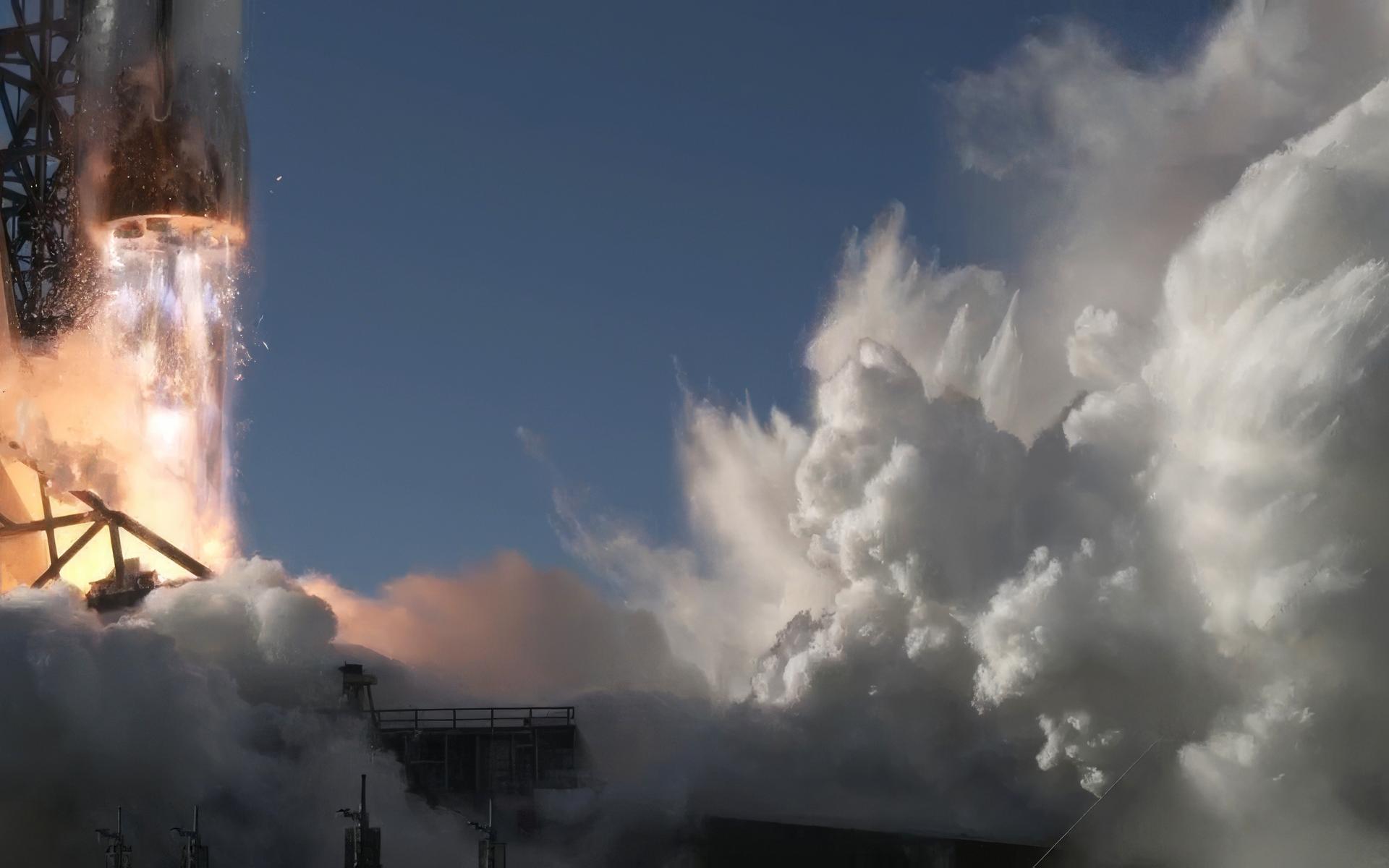
The single most expensive sound in commercial spaceflight is a rocket testing its engines on the ground and then not stopping. Blue Origin’s fourth New Glenn vehicle exploded in a fireball at Cape Canaveral on Thursday night during a routine pre-launch engine test, ending the mission a week before liftoff and leaving the company’s only orbital launch pad with visible damage.
The static fire test, a brief ignition of the rocket’s first-stage engines while the vehicle is bolted to the ground, was scheduled at Space Launch Complex 36 at around 9 p.m. EDT. Local residents in Cape Canaveral and Cocoa Beach reported a loud blast and an orange fireball visible from miles away. No injuries were reported, according to Cape Canaveral Space Force Station officials. Blue Origin confirmed that the NG-4 vehicle was destroyed and that at least one lightning protection tower and the rocket’s transporter erector were damaged. The full extent of pad damage is still being assessed. The rocket had been scheduled to launch on June 4 carrying 49 satellites for Amazon’s Leo broadband constellation, the first of 24 booked Leo missions. Jeff Bezos said on X that all personnel were safe and that “it’s too early to know the root cause but we’re already working to find it.”
This is the kind of moment that decides how fast the new space race actually moves. New Glenn is one of a small handful of American heavy-lift rockets in service, with a quoted capacity of 45,000 kg (99,000 lb) to low Earth orbit using seven Blue Engine 4 (BE-4) methalox (methane and liquid oxygen) engines on the first stage. NASA is counting on a future New Glenn flight to send Blue Origin’s Blue Moon Mark 1 Endurance lander to the lunar South Pole later this year as the opening move of the Moon Base program. Losing the pad concentrates more US launch demand on SpaceX, complicates the Moon Base schedule, and stretches Amazon’s Federal Communications Commission deadline to deploy half of its 3,236-satellite Leo broadband constellation by July 2026.
The reason static fires exist at all is that this is where rockets are supposed to break. Methalox engines like the BE-4 burn liquid methane and liquid oxygen at pressures and temperatures that punish every weld, seal, and turbopump bearing on the vehicle; a brief ground ignition with the rocket clamped down is the cheapest way to find a fault before flight. The BE-4 has its own scars on the road here. Blue Origin spent more than a decade developing the engine, ran into oxidizer-rich combustion problems on the test stand in 2023, and only certified the variant flying tonight after a hot-fire campaign that ran nearly a year longer than planned. Seven of those engines firing together at full thrust is a different machine than one on a stand, and investigators will be looking at engine-to-engine harmonics, plumbing on the methane side, and how cleanly the hold-down system absorbed the load.
The longer arc matters too. Every program that ended up working ate at least one fireball on the way. SpaceX lost a Falcon 9 on the pad in 2016 to a helium tank failure during a similar static fire and came back to dominate the industry. The Soviet N1 lunar rocket exploded on or near the pad four times in a row in the late 1960s and 1970s and never flew successfully, which is the other side of this coin. NASA’s Saturn V development burned through Apollo 1’s crew and a string of unflown hardware before it carried twelve people to the Moon. None of that makes Thursday night easier for the Blue Origin team standing in front of a damaged pad, but it is the honest historical frame. A pad loss is not the end of the program. It is the most expensive piece of test data the program will ever buy.
What to watch: Blue Origin’s preliminary findings on the cause, whether SLC-36 can be rebuilt in months rather than years, and whether the Moon Base I lander can hold its 2026 launch window or slips into 2027.